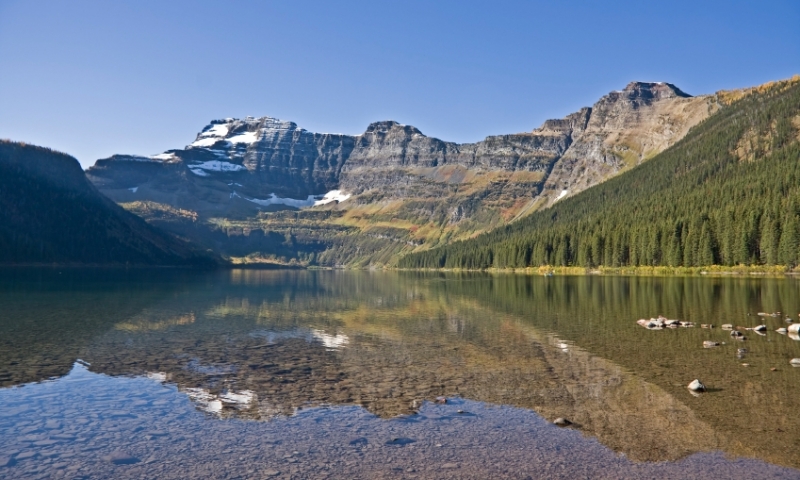


- Cameron Lake is located at the western end of Akamina Parkway in the southwestern corner of Waterton Park.
- With a boat rental facility, picnic area, exhibit and nearby hiking trails, Cameron Lake offers something for your entire family.
- Pack your camera for splendid views featuring cliffs, forests and abundant wildlife.
Overview
One of Waterton Park’s many gems, Cameron Lake is enclosed by tall mountain cliffs and sub-alpine forests full of wildlife. Often visited because of its location at the end of Akamina Parkway, it’s worth spending a few hours in peaceful relaxation on or around this glacial lake. Rent a boat and paddle to the opposite shore to watch Grizzly bears roam, take a hike down one of several trails, or merely relax in the picnic area with your family and take in the views.
Location/Directions
Cameron Lake is located in the southwestern corner of Waterton Park. From Waterton Townsite, travel 10 miles west on Akamina Parkway until you reach the road’s end; Cameron Lake is the terminating point.
Season
Cameron Lake can be reached via Akamina Parkway from the first weekend in May until October 31. (Road is closed from Little Prairie picnic area to the lake for the remainder of the year.)
Activities
Boating: Cameron Lake Boat Rentals offers visitors the opportunity to explore the lake in one of four self-propelled crafts. Choose from:
- Canoe
- Kayak
- Peddle Boat
- Rowboat
Wildlife Viewing: Grizzly bears are often spotted roaming the slopes of Cameron Lake’s far shore. Other common wildlife species include deer, eagles, moose, big horn sheep and mountain goats.
Hiking: Take the short trail skirting Cameron Lake's shoreline, or try one of these nearby hikes:
- Akamina Lake
Trailhead: Cameron Lake
Distance (one-way): 1 km (.6 miles)
Length: 30 minutes
Ascent: Minimal
Difficulty: Easy - Summit Lake
Trailhead: Cameron Lake
Distance (one-way): 8 kms (4.9 miles)
Length: 3 hours
Ascent: 305 meters (1000 ft)
Difficulty: Easy - moderate
Additional Information
Cameron Lake also features an on-site exhibit and nearby warden station.